Imagining
Build the world
The dramatic idea: plot, characters and a coherent world.
Ask your team: What tension makes your story worth entering?
Try it in practice: For a new museum concept, try writing a one-sentence dilemma before choosing technology. Give the visitor a reason to care about what happens next.
Imparting
Make the story available
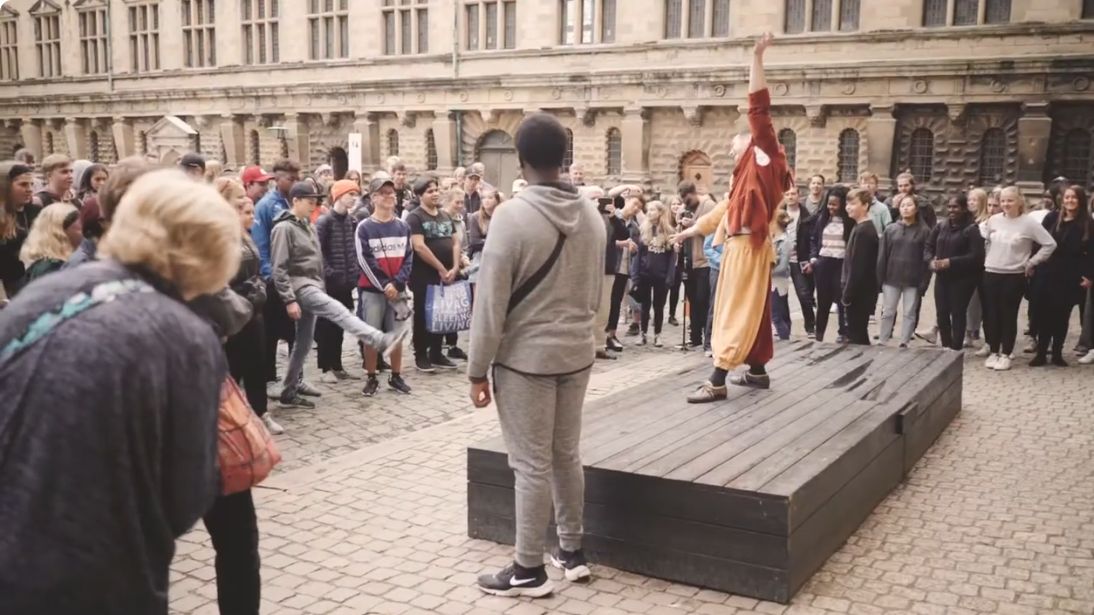
Communicate the narrative through performance, dialogue and historical context.
Ask your team: How will a first-time visitor discover the story?
Try it in practice: Prototype a welcome that reveals an intriguing detail through an object, a voice or a meeting. Test whether it opens a conversation rather than overwhelming people with information.
Interpreting
Invite a different role
Visitors understand the setting and explore different social roles.
Ask your team: Who could the visitor become in this encounter?
Try it in practice: Imagine asking someone to become a witness, adviser or curious apprentice. Make the invitation easy to understand, with an equally welcoming option to watch.
Interacting
Let the guest contribute
The encounter becomes something actors and visitors create together.
Ask your team: What changes because this particular visitor is here?
Try it in practice: Try a conversation in which the host uses the visitor’s answer to choose a next question. Compare that with an interaction that always leads to the same response.
Initiating
Open an unexpected door
Unplanned encounters introduce surprise into the visitor’s journey.
Ask your team: Where could curiosity lead to a new encounter?
Try it in practice: Consider a quiet moment between scheduled activities: a character needs advice, or a host notices a guest studying an object. Design space for an invitation without making it compulsory.
Improvising
Respond to the person
Performers adapt to the encounter while staying in character.
Ask your team: What can your team vary, and what must remain true?
Try it in practice: Rehearse one situation with three different visitor responses. Agree on factual boundaries and tone, then give the host room to listen and respond. Improvisation can be prepared without fixing every line.
Identity
Make room for meaning
Authenticity and emotion can affect a visitor’s sense of self.
Ask your team: What might someone discover about themselves here?
Try it in practice: Offer a moment of reflection after an encounter: what surprised you, and what would you choose now? Look for personal meaning in visitors’ own words rather than assuming every guest has been transformed.