The 7 I’s / Experiential Strategy Framework

From a story you watch.
To a world you enter.

What makes an encounter feel alive? The 7 I’s give creative teams a language for designing the story, the invitation and the space for a visitor’s own response.

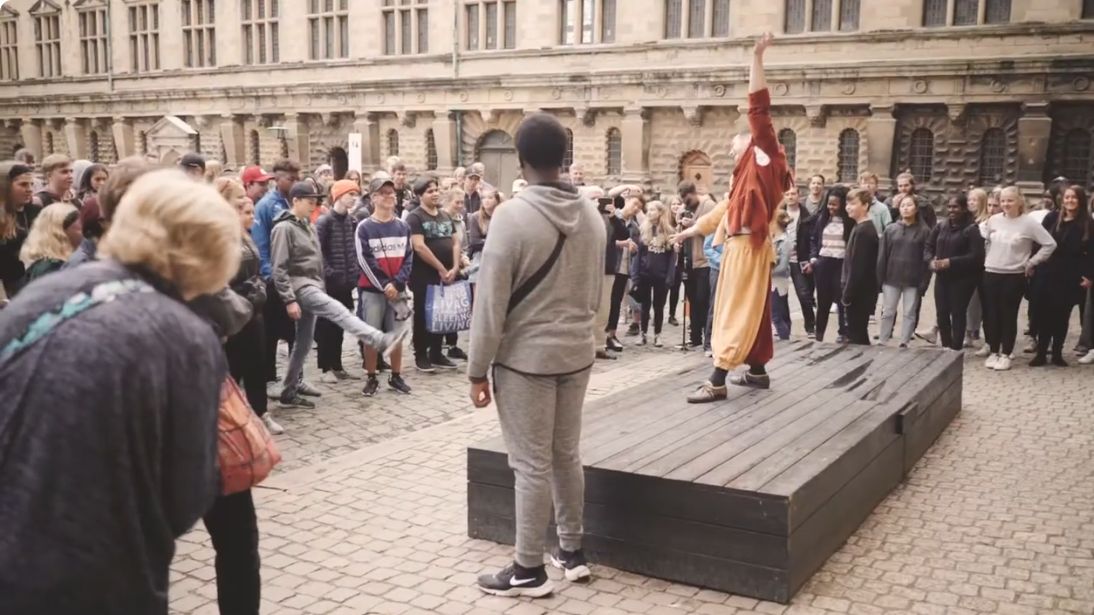
A Hamlet Live performer and visitors participating in Kronborg Castle’s courtyard
A Hamlet Live performer and visitors participating in Kronborg Castle’s courtyard. The case connects live storytelling with visitor participation.

From research to visitor experience

Hamlet Live at Kronborg Castle

Born from Hamlet Live

Creative practice.
Examined through research.

The framework grew from a study of Hamlet Live at Kronborg, created by Peter Holst-Beck with creative collaborator Barry McKenna. The research connects staged theatre with visitor participation and personal experience.

The paper draws on observation, actor interviews and visitor reviews. It identifies seven interconnected elements, from the designed narrative to the visitor’s sense of authenticity and identity.

Explore Hamlet Live ↗

Published in Journal of Heritage Tourism, 17(2), 125–141, 2022; first published online 19 July 2021. DOI: 10.1080/1743873X.2021.1951277 ↗

Explore the framework

Seven elements.
One living experience.

The explanations below introduce the elements. The questions and practical exercises are original suggestions for applying them to your project.

Imagining

Build the world

The dramatic idea: plot, characters and a coherent world.

Ask your team: What tension makes your story worth entering?

Try it in practice: For a new museum concept, try writing a one-sentence dilemma before choosing technology. Give the visitor a reason to care about what happens next.

Imparting

Make the story available

Communicate the narrative through performance, dialogue and historical context.

Ask your team: How will a first-time visitor discover the story?

Try it in practice: Prototype a welcome that reveals an intriguing detail through an object, a voice or a meeting. Test whether it opens a conversation rather than overwhelming people with information.

Interpreting

Invite a different role

Visitors understand the setting and explore different social roles.

Ask your team: Who could the visitor become in this encounter?

Try it in practice: Imagine asking someone to become a witness, adviser or curious apprentice. Make the invitation easy to understand, with an equally welcoming option to watch.

Interacting

Let the guest contribute

The encounter becomes something actors and visitors create together.

Ask your team: What changes because this particular visitor is here?

Try it in practice: Try a conversation in which the host uses the visitor’s answer to choose a next question. Compare that with an interaction that always leads to the same response.

Initiating

Open an unexpected door

Unplanned encounters introduce surprise into the visitor’s journey.

Ask your team: Where could curiosity lead to a new encounter?

Try it in practice: Consider a quiet moment between scheduled activities: a character needs advice, or a host notices a guest studying an object. Design space for an invitation without making it compulsory.

Improvising

Respond to the person

Performers adapt to the encounter while staying in character.

Ask your team: What can your team vary, and what must remain true?

Try it in practice: Rehearse one situation with three different visitor responses. Agree on factual boundaries and tone, then give the host room to listen and respond. Improvisation can be prepared without fixing every line.

Identity

Make room for meaning

Authenticity and emotion can affect a visitor’s sense of self.

Ask your team: What might someone discover about themselves here?

Try it in practice: Offer a moment of reflection after an encounter: what surprised you, and what would you choose now? Look for personal meaning in visitors’ own words rather than assuming every guest has been transformed.
International academic relevance

A framework in the research conversation

The 7 I’s paper is included in a systematic review of tourism storytelling and referenced in later research on immersive museums and cultural tourism. This provides a documented basis for discussing the framework’s international academic relevance.

WXO’s Campfire 38 also brought all four co-authors together to explain the framework through Hamlet Live examples. For a creative team, the framework offers a shared language for examining how a story, its performers and its visitors meet.

Explore the studies and their relevance ↗

Putting it together

Design the invitation.
Leave room for the encounter.

A strong story is a starting point. Consider how someone discovers it, understands their invitation and contributes. Then examine whether your team can respond when a guest does something you did not predict.

Use the elements together as a design conversation: a surprise needs a reason to exist; participation needs clarity; improvisation needs preparation. Give each creative decision a purpose in the visitor’s journey.

For a first working session, choose one audience and one encounter. Sketch it, rehearse it, observe what people actually do, and revise it. A small prototype can expose questions that a polished concept presentation leaves unanswered.

Meet a co-author

B. Joseph Pine II
Joe Pine

A pioneer of the
Experience Economy.

Joe Pine helped establish the Experience Economy as a business concept with James H. Gilmore. Their 1999 book, The Experience Economy: Work Is Theatre & Every Business a Stage, made the case for experiences as a distinct source of economic value beyond goods and services.

An author, speaker and management adviser, Pine co-founded Strategic Horizons with Gilmore. He also co-authored Authenticity: What Consumers Really Want. His work on experiences and authenticity is directly relevant to the questions explored in the Hamlet Live study, which lists him among its four authors.

Joe Pine’s official biography ↗

The author team

Research and practice
in the same conversation.

The article is co-authored by Niels Frederik Lund, Peter Holst-Beck, B. Joseph Pine II and Anna Leask. Their backgrounds connect tourism research, creative production, experience strategy and visitor attraction management.

Dr Niels Frederik Lund

Tourism, storytelling & research

Lund holds a PhD from the University of Surrey, completed in 2018. His research interests include storytelling, destination branding, social media and performance in tourism. He combines academic work with experience in guiding, tourism marketing and product development.

He is the first-listed author of the Hamlet Live paper. His university profile also identifies Hamlet Live as a research project.

University biography ↗

Peter Holst-Beck

Creative direction & live experience

Peter is an actor, director, producer and cultural experience designer. As the creator of Hamlet Live and a co-author of the study, he connects the practical making of the experience with the research that examines it.

His work asks how characters, places and audiences can meet in a shared story. Today, that experience informs his creative direction, consulting and workshops.

More about Peter ↗

Professor Anna Leask

Visitor attractions & cultural heritage

Leask is Professor Emerita at Edinburgh Napier University and an expert in visitor attraction, museum and heritage management. Her research explores how attractions engage different audiences and how heritage destinations are managed.

A co-editor of Managing Visitor Attractions, she works across research and the heritage sector. Her background places the study within the wider challenges facing cultural organisations and their visitors.

University biography ↗

Work with Peter

Turn the framework
into a working session.

Bring a real challenge: a museum visit that needs more participation, a heritage story waiting to be heard, or a new attraction concept. Peter can help your team examine the visitor journey, develop ideas and prototype an encounter.

Explore workshops & consulting ↗

The practical suggestions on this page are an introduction, not a reproduction of the paper. The original study concerns a heritage attraction; applying its ideas in other settings calls for adaptation and testing. Read the journal article ↗ · University-hosted manuscript ↗