Kronborg Castle / Denmark / 2016
Hamlet Live:
the castle becomes the story.
Hamlet Live brings Shakespeare’s world into the rooms and corridors of Kronborg Castle, with live characters and encounters that visitors can take part in.
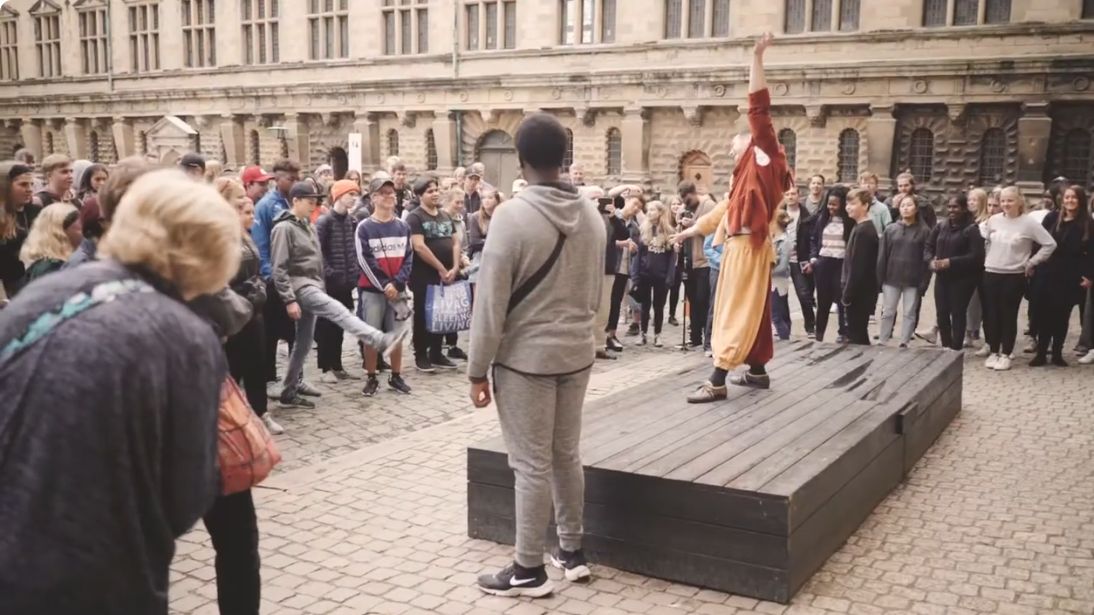
See the experience
The audience enters the story.
A shared courtyard becomes a stage for an encounter. The film shows how performance, place and visitor participation come together in Hamlet Live.
Watch the project film ↗- Setting
- Kronborg Castle, Denmark
- Peter’s role
- Co-creator; concept, writing and direction
- Creative collaboration
- Barry McKenna
The project: a live heritage experience
Hamlet Live is an immersive theatre experience within a working visitor attraction. Kronborg is both a historic place to explore and the setting associated with Shakespeare’s Hamlet. The design brings those two ways of experiencing the castle together: visitors encounter the fictional world while moving through the real building.
The central design question is how to make a well-known story present during an ordinary castle visit. That requires a relationship between the rooms, the characters and the people arriving in them. The story has to work as a sequence of encounters as well as a dramatic whole.
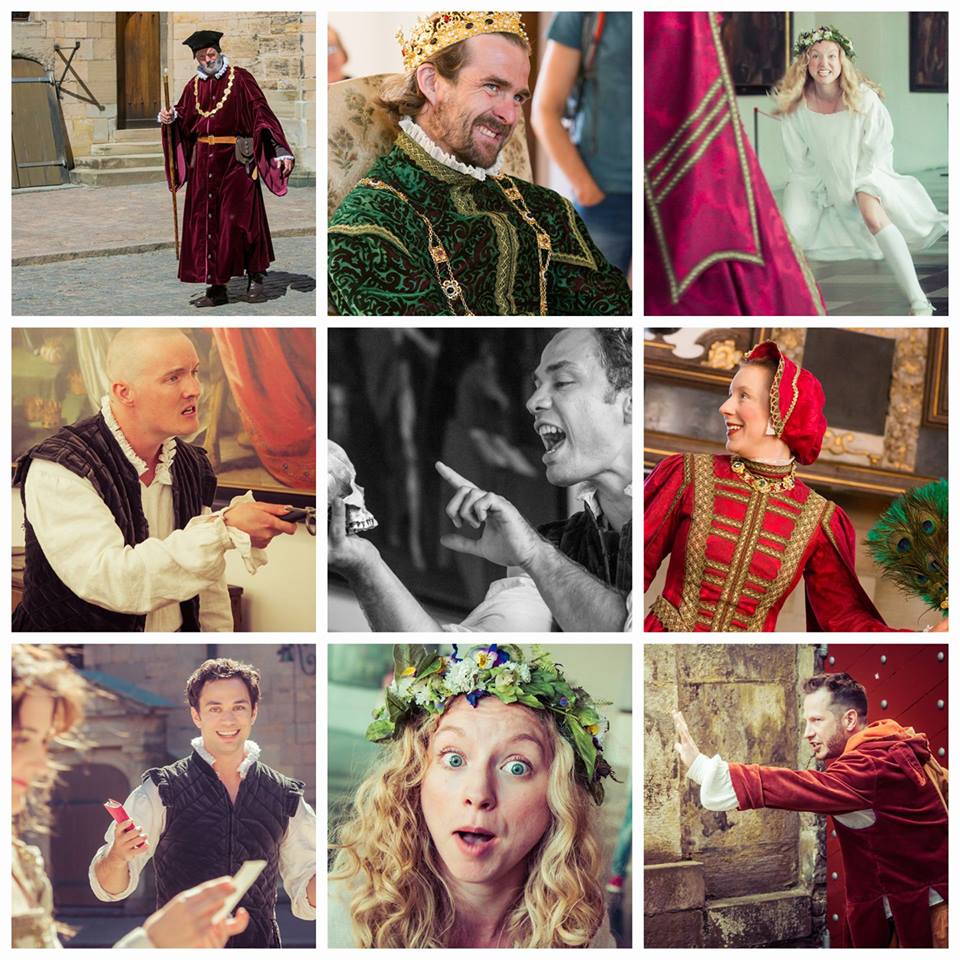
Peter’s role: concept, writing and direction
Peter developed the experience in creative collaboration with Barry McKenna, with a contribution spanning concept, writing and direction. This connects the initial idea with the live situations that visitors actually meet.
For this kind of experience, creative direction must hold together two things: the coherence of the fictional world and the openness of an encounter with a real guest. A character needs a clear dramatic identity while allowing space for a conversation to take an unexpected turn.
The visitor experience: discover, watch, take part
Visitors meet characters as they explore the castle. Short scenes establish the drama; interaction and improvisation allow an encounter to respond to the people present. The experience unfolds across rooms and corridors rather than asking everyone to follow one fixed viewing position.
This creates several ways into the story. A visitor can observe an encounter, become curious about a character or take part in an exchange. Place gives the meeting context, performance gives it a human presence, and participation gives the visitor a relationship to what is happening.
Design lesson: make heritage a human encounter
The case illustrates how immersive storytelling can connect a cultural landmark with live, responsive performance. The important design choice is to give the visitor something to discover and someone to encounter within the place itself.
For museums and heritage attractions, the transferable question is: which stories could visitors meet here, and what role could they have in that meeting? The answer should grow from the particular site, its material and its audience.
From practice to research
The experience behind the 7 I’s.
The published study of Hamlet Live uses observation, interviews and visitor reviews to develop the 7 I’s Experiential Strategy Framework. Peter co-authored the paper with Niels Frederik Lund, B. Joseph Pine II and Anna Leask. The study offers a research-based account of the experience and its design; it should be read in the context of this particular heritage attraction.
International academic relevance
Hamlet Live in international research
The production has been examined in Danish and Australian academic work, including a Roskilde University master’s thesis and Kathryn Prince’s research chapter at the University of Western Australia, both from 2019. Later research has also examined the employees’ learning and adaptation during Covid-19.
The article presenting the 7 I’s has subsequently been cited and discussed in international research on tourism storytelling, immersive museums and authentic heritage experiences. Together, these studies connect the practical case with broader questions about performance, participation and place.
Explore the studies and their relevance ↗